
Extreme heat puts lives, livelihoods, ecologies and economies at risk. As evidenced by the record temperature of 49.9 C (in Podor), the urgency for action in Senegal is acute. Senegal is already bearing the brunt of climate change impacts and projections indicate rising temperatures, erratic rainfall, and climate extreme events –– including irreversible decline in river flow, livestock, crop and aquaculture yield reduction, pest proliferation, soil and ecosystems degradation, not to mention deep and damaging public health and economic consequences. Temperatures are predicted to increase between 1.05°C and 1.15°C by 2050 and up to 1.85°C to 4.5°C by 2090.
In October 2026, Senegal’s Ministry of Environment and Ecological Transition (METE) convened 16 other ministries, national experts and partners together with the UK government, for the first coordinating meeting on heat risk governance and investment, identifying initial challenges, priorities and gaps to determine next steps in how to advance a coordinated national response.
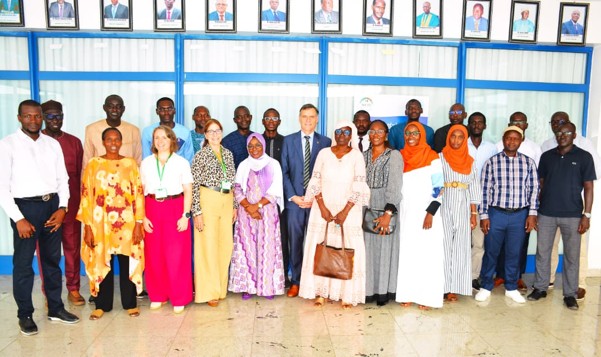
The Director of Climate Change, the Ecological Transition and Green Financing, Dr. Madeleine Diouf SARR, highlighted that in a context of irreversible rising heat, Senegal is hampered by a prevailing short termist approach to socio-ecological and economic development with incomplete projections and integrated application in public and private decision-making and investment. This project offers the possibility to change this.
At this meeting, the Government of Senegal resolved to establish a Steering Committee to be co-chaired by the METE and Agence nationale de l’aviation civile et de la météorologie (ANACIM), to oversee:
- working groups for different sectors to assess current and future heat impacts and identify measures to minimize those impacts, supported by
- a Scientific working group, regrouping scientific institutes and universities.
“As the reality of extreme heat’s impacts on the health and wellbeing of people and the ecosystems upon which we depend becomes unavoidable, governments and investors are seeking solutions to curb the rise in heat, and better assure the very functioning of society and economy. Countries such as Senegal are showing the leadership that many crave, in exploring how we might decide, invest and act differently; and so chart liveable and more resilient pathways for all life in the 21st century.” — Marc Gordon, Senior Coordinator of the Midterm Review of the Sendai Framework (MTR SF) & Global Lead, Extreme Heat Risk Reduction
United Nations Office for Disaster Risk Reduction (UNDRR) and World Meteorological Organization (WMO), together with Global Heat Health Information Network (GHHIN) and Duke University are supporting Senegal pilot an innovative integrated heat risk governance approach to tackle heat risks and impacts, connecting heat governance, public–private action and financing.
Senegal is the first developing country to apply the Extreme Heat Risk Governance Framework and Toolkit.
This work is further supported by the UK’s Foreign, Commonwealth & Development Office (FCDO), the European Bank for Reconstruction and Development (EBRD), the World Bank, the African Development Bank (AfDB), the Green Climate Fund (GCF) and the Private Infrastructure Development Group (PIDG).
UNDRR will replicate this work in Nepal and Belize, also through recently approved CREWS Accelerated Support Window (ASW) funding, adapting lessons from Senegal to each country’s needs.
The dialogue opens an opportunity to incentivize, scale and sustained public and private investment in heat resilience. Engagement with the GCF and other climate funds could help strengthen heat governance and scale up action to reach more communities exposed to extreme heat.
The CREWS ASW is a highly responsive, demand driven, small-grant mechanism designed to address urgent needs and strategic gaps. The ASW action is intended to help demonstrate new ideas, technologies, and operational approaches that may later be scaled up through larger investments.
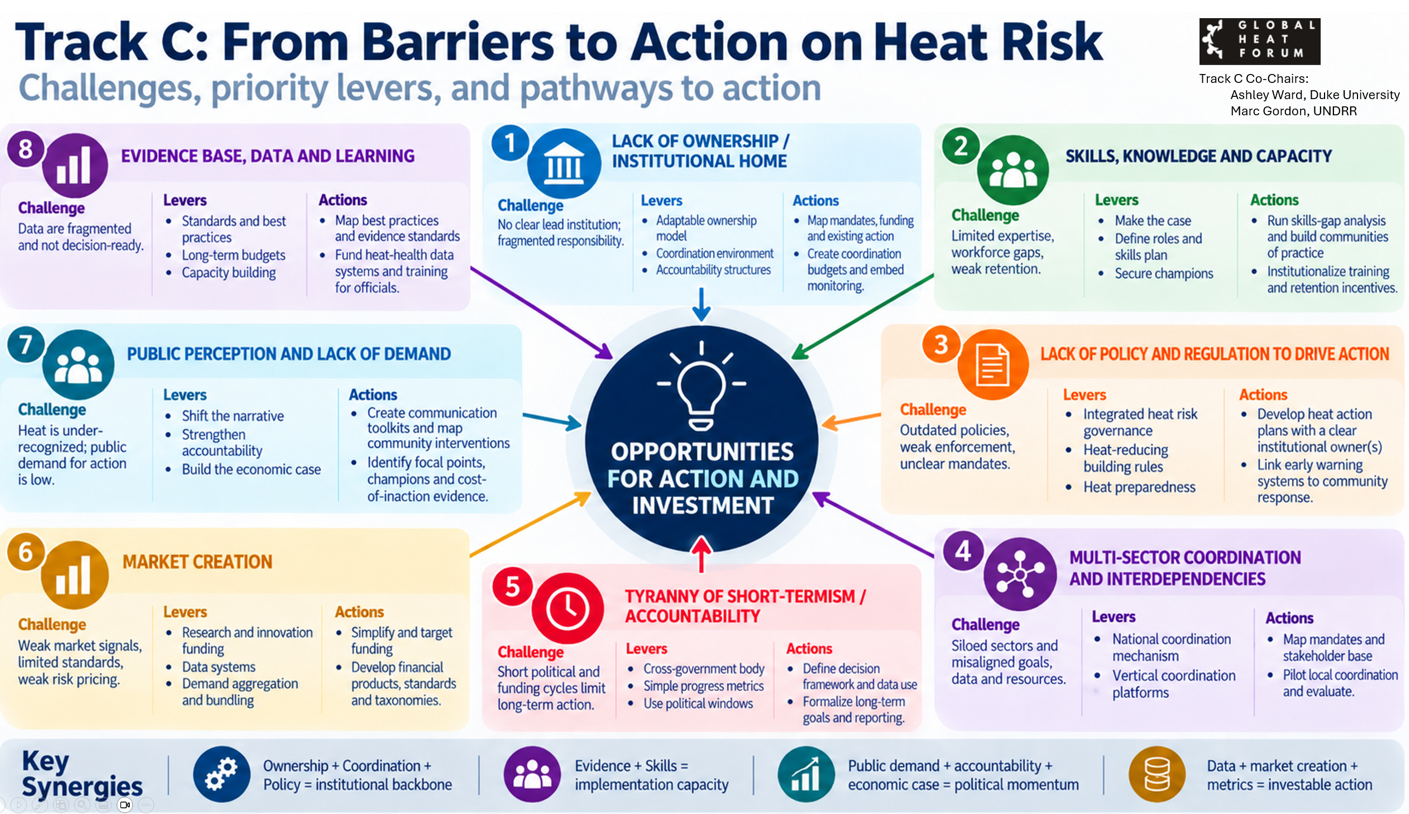
👇 See the output of the Global Heat Forum Track C – Governance, policy and investment: